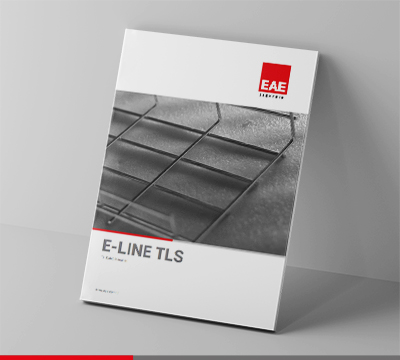
Wire Mesh Cable Tray | Stainless Steel or Electro-Galvanized
With E-line TLS series Wire Mesh Cable Trays, cable outputs are downward to the right or the left between the wires can be easily made thanks to the cage structure of Wire Mesh Tray system. They are produced as stainless steel or electro-galvanized plating options.
Catalog
Filters
Product Usage Features
Materials:
Wire mesh cable trays can be produced in electro-galvanized, hot-dip galvanized, and stainless steel options.
Ventilation:
The woven structure allows for excellent ventilation, preventing overheating and damage.
Lightweight Design:
The lightweight construction makes transport and installation easier.
Air Circulation:
The wire mesh structure promotes air circulation around the cables, helping to prevent overheating and damage.
High-Tech Cable Requirements:
Our wire mesh cable trays are designed with modern high-tech wiring needs in mind, made from durable stainless steel or electro-galvanized wire.
Hygienic Industries:
These trays are commonly used in industries where hygiene is a priority, such as the food production industry, and in data cables and low-voltage installations.
Flexibility:
Their lightweight and flexible design makes them ideal for curved transitions, and their open-top design makes cable routing easier. A wide range of joint spacing, clamps, and elbow options are available.
Usage Areas
Chemical Plants
Factories and Industrial Installations
Food Premises
Offices
Data Centres
Banks
Hospitals
Airports
Technical Features
TLS: Wire Mesh Cable Tray
Height options: 35 mm, 50 mm, and 100 mm; width options: 50 mm, 100 mm, 150 mm, 200 mm, 250 mm, 300 mm, 400 mm, 500 mm, and 600 mm.
Wires used in the tray range between Ø4 mm and Ø5 mm.
Standard length: 3000 mm.
Wire mesh cable trays are constructed by interweaving horizontal and vertical wires, with horizontal wires spaced at 100 mm and vertical wires spaced at 50 mm.
Low-voltage current cables must be installed within a separate partition inside the wire basket trays.
Separators must be installed to isolate low-voltage current cables within the same height and length, or these cables must be placed in separate cable trays.
Cables must be secured within the cable tray using plastic cable ties.